
Sciatica: What It Is, What Actually Helps, and Where Deep Tissue Massage Fits
By Diana, Russian massage therapist · · 12 min read
Sciatica has a way of announcing itself. You get out of the car after a long drive, or stand up after a day at your desk, and there it is: a sharp, burning line running from your lower back, through your buttock and down one leg. Some days it's a dull ache. Other days it feels like an electric shock every time you bend to pick something up.
Guests often bring it up during the consultation before a deep tissue massage, and the same questions come up every time. What is it, actually? Will massage help? Is there anything I should be doing at home?
This guide answers those questions honestly. We'll explain what's going on, what genuinely helps, which warning signs mean you should see a doctor rather than a massage therapist, and where deep tissue massage fits in. The short answer: it can help a lot with how you feel, but it isn't a cure, and anyone who tells you otherwise is overselling.
What sciatica actually is
Sciatica isn't a condition on its own. It's the name for a set of symptoms caused when the sciatic nerve, or one of the nerve roots in your lower spine that form it, gets irritated or squeezed.
The sciatic nerve is the longest and thickest nerve in the body. It starts in your lower back, runs through your buttock, down the back of your thigh, and branches out just above the knee to your calf and foot. That's why sciatica travels. The problem is usually in your back, but you feel it in your leg.
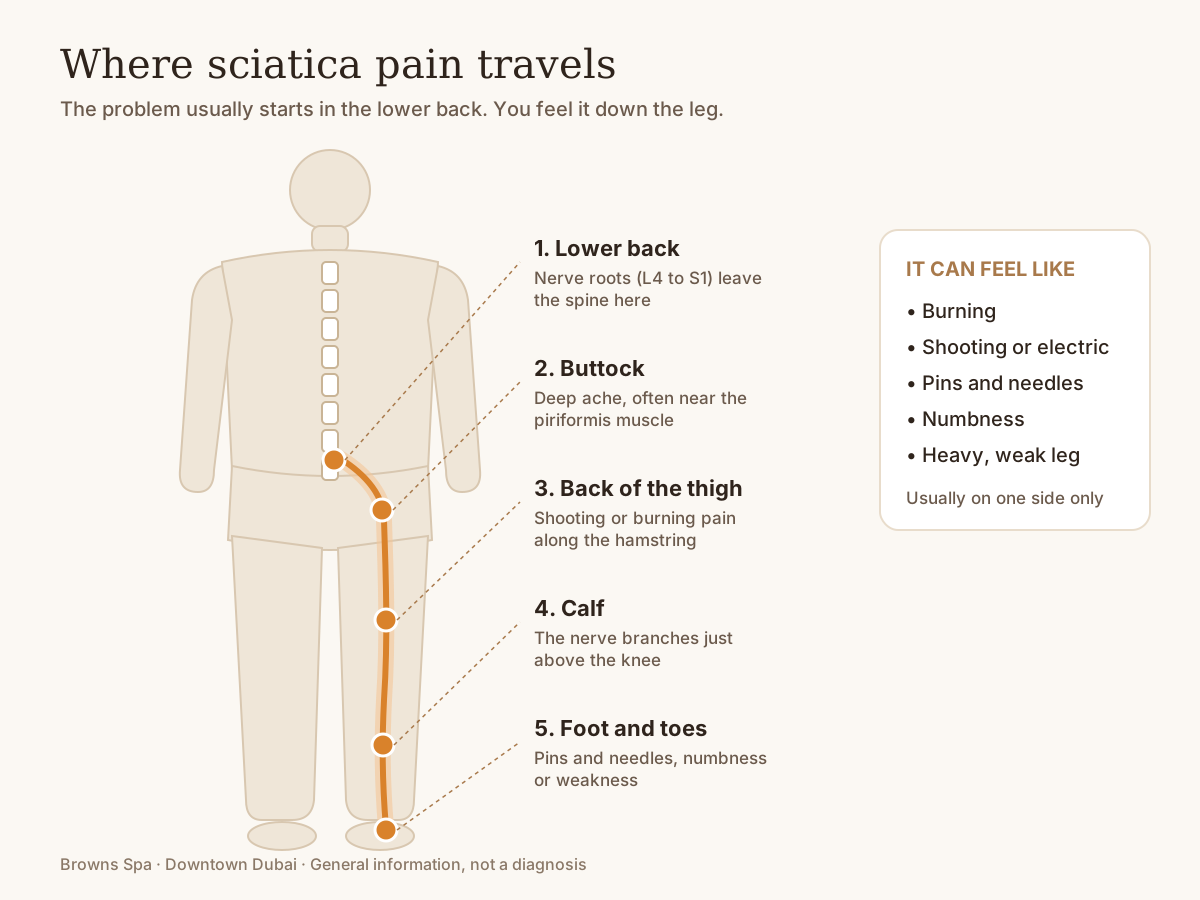
The most common signs are:
- Pain that runs from your lower back or buttock down the back of one leg
- Burning, shooting or "electric" pain, rather than a dull muscle ache
- Pins and needles or numbness in your leg or foot
- Pain that gets worse when you sit for a long time, cough, sneeze or bend forward
- Symptoms on one side only
That last point matters. Sciatica in both legs at the same time is much less common, and it's one of the warning signs we'll come to in a moment.
What usually causes it
Something is pressing on or irritating the nerve. In most people, it's one of these:
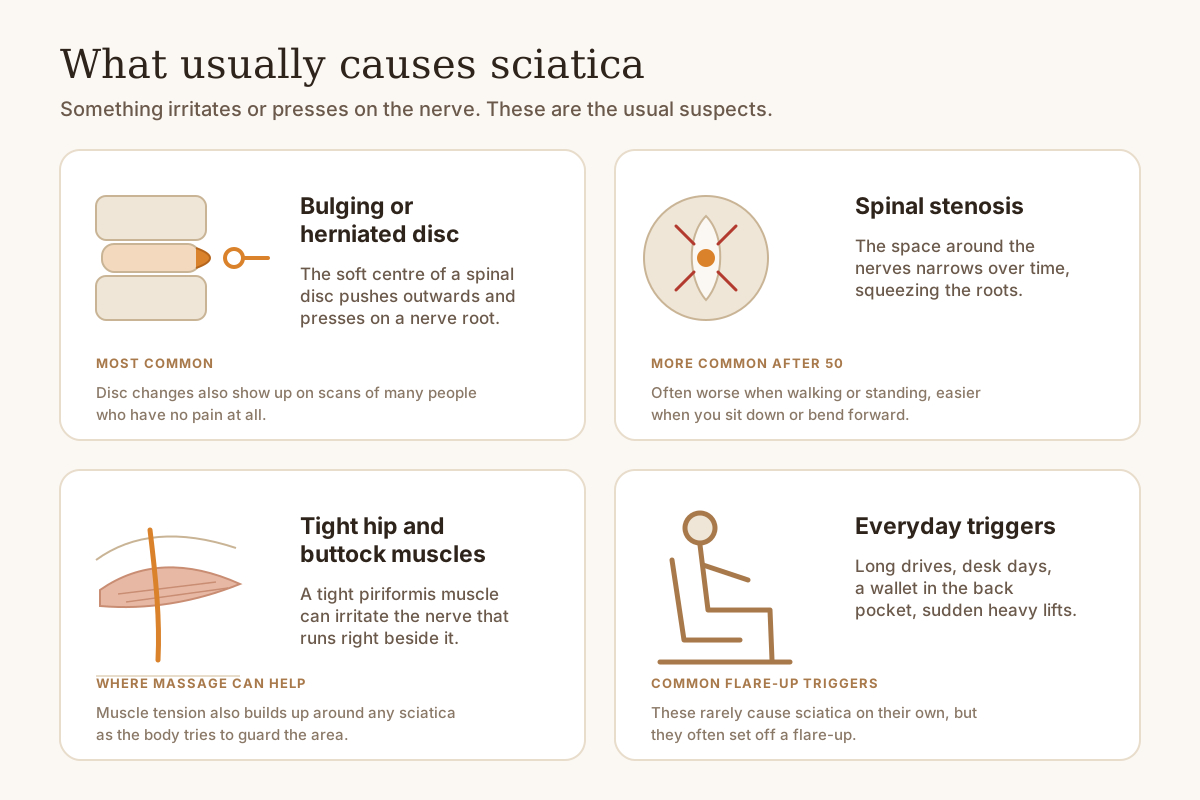
A bulging or herniated disc is the most common cause. The discs between your vertebrae have a soft centre, and when part of it pushes outwards it can press on a nerve root. It's worth knowing that disc changes are very common and show up on scans of plenty of people who have no pain at all, so a scan result on its own doesn't tell the whole story.
Spinal stenosis is a gradual narrowing of the space around the nerves, which becomes more common after 50. It often feels worse when walking or standing and easier when you sit or lean forward.
Tight muscles in the hip and buttock can also play a part. The piriformis muscle sits deep in the buttock right next to the sciatic nerve, and when it's tight or in spasm it can irritate the nerve. Even when muscles aren't the original cause, they almost always tighten up around the pain as your body tries to protect the area.
Everyday habits rarely cause sciatica on their own, but they're often what sets off a flare-up. And honestly, life in Dubai doesn't help. A lot of us spend an hour or more a day in the car, eight or more hours at a desk, and then sit again all evening. Add a wallet in your back pocket on a long drive along Sheikh Zayed Road, or a hard padel session after a week of no movement, and it's easy to see why so many backs complain.
When to see a doctor first
Before we get into what helps, this part is important. Most sciatica isn't dangerous, but a few symptoms mean you need a doctor, not a massage.
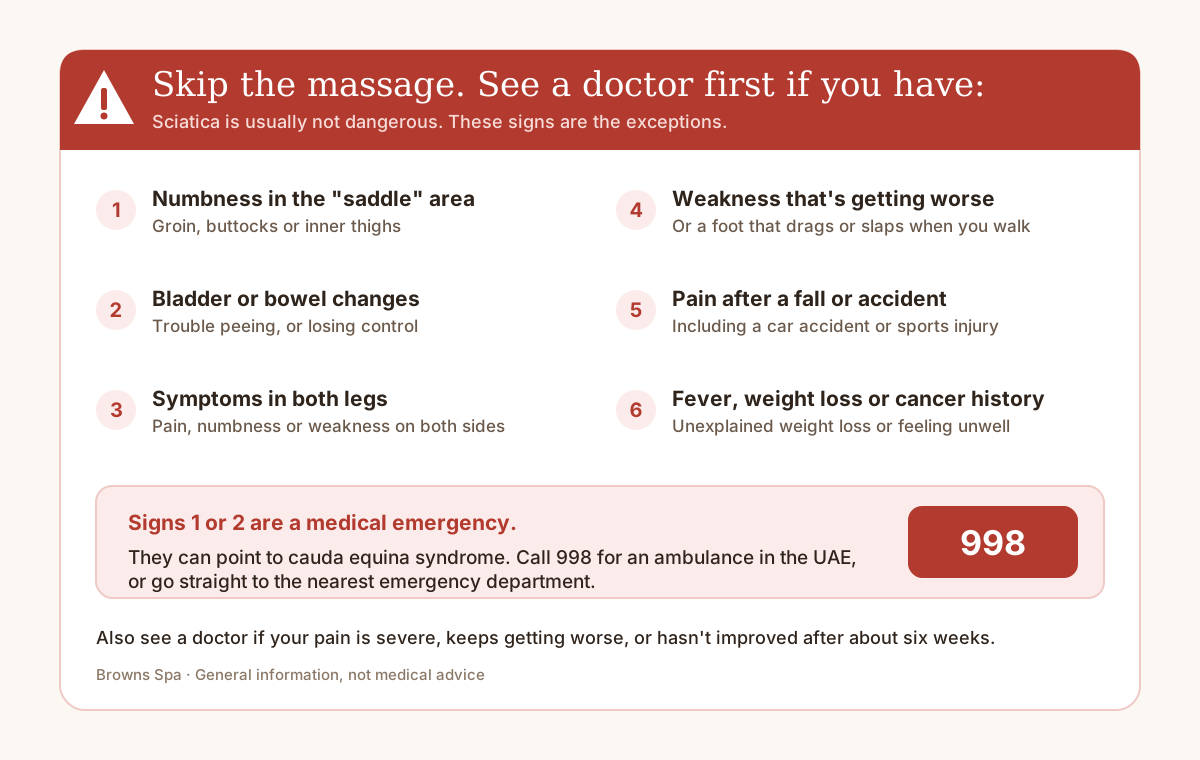
Please don't book any massage, with us or anyone else, if you have:
- Numbness around your groin, buttocks or inner thighs (the "saddle" area)
- New trouble peeing, or losing control of your bladder or bowels
- Pain, numbness or weakness in both legs
- Leg weakness that's getting worse, or a foot that drags or slaps when you walk
- Pain that started after a fall, a car accident or a sports injury
- A fever, unexplained weight loss, or a history of cancer
The first two are a medical emergency. They can be signs of cauda equina syndrome, where the nerves at the base of the spine are badly compressed, and it needs treating quickly. In the UAE, call 998 for an ambulance or go straight to the nearest emergency department.
You should also see a doctor or physiotherapist if your pain is severe, keeps getting worse, or hasn't improved after about six weeks.
How long does sciatica last?
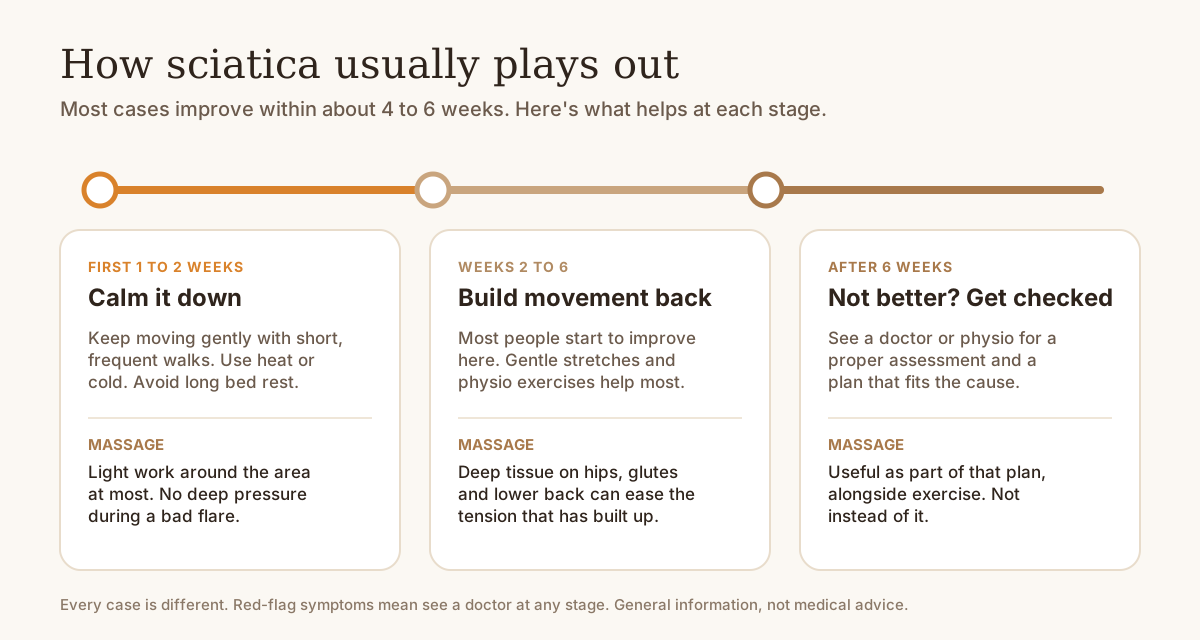
Here's the good news. For most people, sciatica gets better on its own within about four to six weeks. For some it lingers longer, and for others it comes and goes. What you do during those weeks makes a real difference to how quickly you recover and how comfortable you are along the way.
What actually helps
These are the things that genuinely make a difference, based on current medical advice rather than wishful thinking.
Keep moving. Bed rest used to be the standard advice. Now we know that staying gently active helps you recover faster. You don't need to push through sharp pain, but short, frequent walks are better than lying still all day.
Use heat or cold. A cold pack can take the edge off in the first couple of days of a flare. After that, heat usually feels better: a warm shower, a heat pack or a hot water bottle on your lower back and buttock. Use whichever helps you more, keep it to about 20 minutes, and always wrap it in a towel.
Break up your sitting. Set a reminder to stand up and move every 30 to 45 minutes. On long drives, stop for a short walk when you can, use a lumbar cushion, and take your wallet out of your back pocket.
Sleep in a supported position. On your side with a pillow between your knees, or on your back with a pillow under your knees. Both take pressure off the lower back.
Do gentle stretches. We've included four below that most people find helpful.
See a physiotherapist if it isn't settling. A physio can work out what's driving your symptoms and give you exercises matched to the cause, which is something no general guide can do.
Ask about pain relief. Speak to a pharmacist or your doctor about which painkillers, if any, are suitable for you. Don't guess, especially if you take other medication.
Four gentle stretches you can do at home
These are gentle, general stretches that suit most people with sciatica. If a physio has already given you exercises, follow theirs instead.
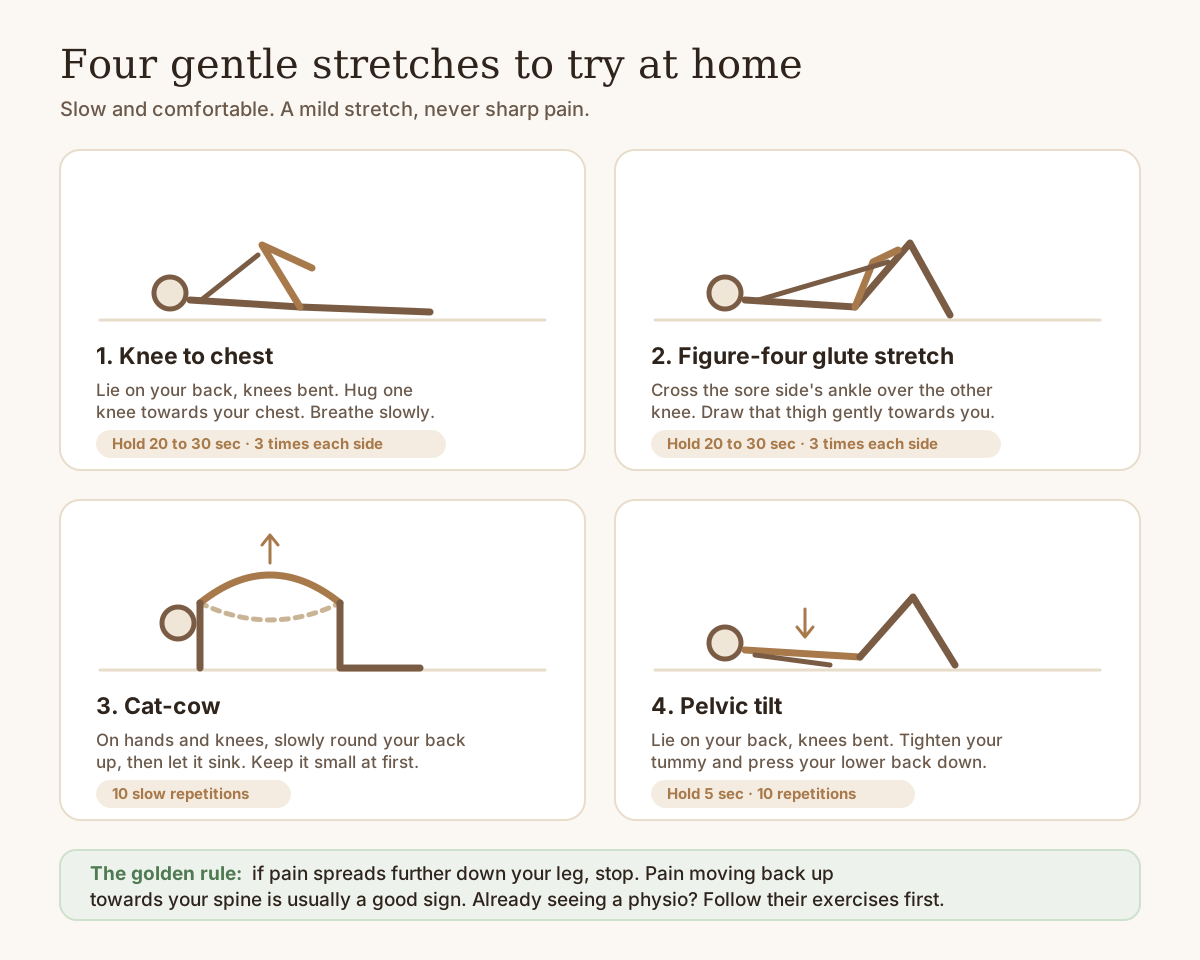
1. Knee to chest. Lie on your back with both knees bent and feet flat. Hold behind one thigh and gently draw that knee towards your chest until you feel a stretch in your lower back and buttock. Hold for 20 to 30 seconds while breathing slowly, then switch sides. Do it three times on each side.
2. Figure-four glute stretch. Lie on your back with both knees bent. Cross the ankle of your sore side over the opposite knee, so your legs make a "4" shape. Hold the back of the uncrossed thigh and gently pull it towards you until you feel a stretch deep in your buttock. Hold for 20 to 30 seconds, three times each side. This one targets the piriformis area.
3. Cat-cow. Get on your hands and knees, hands under your shoulders and knees under your hips. Slowly round your back up towards the ceiling and let your head drop, then slowly let your back sink and lift your head. Keep the movement small at first. Do 10 slow repetitions.
4. Pelvic tilt. Lie on your back with your knees bent. Tighten your tummy muscles and gently press your lower back into the floor, tilting your pelvis slightly upwards. Hold for five seconds, then relax. Do 10 repetitions.
One rule matters more than the rest: if a stretch makes pain spread further down your leg, stop. If the pain moves back up towards your lower back, that's usually a good sign. And a stretch should feel like a mild pull, never a sharp or electric pain.
Where deep tissue massage fits in
Now for the part you came for, and here's the honest version.
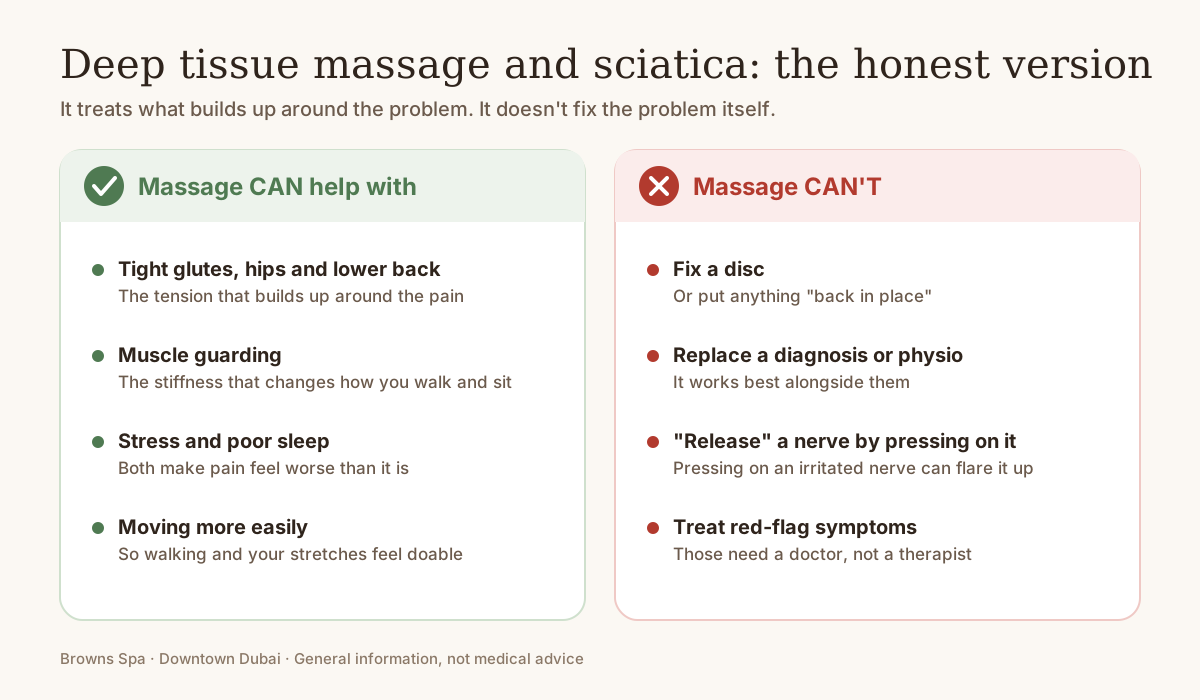
Massage doesn't fix a disc. Nobody can put a disc "back in place" with their hands, and no therapist can "release" an irritated nerve by pressing on it. In fact, heavy pressure directly over an irritated nerve can make things worse.
What massage can do is deal with everything that builds up around the pain. When the sciatic nerve is irritated, the muscles around your lower back, hips and buttock tend to tighten and guard. You start walking differently, sitting differently and sleeping badly. Over time that tension becomes a second source of pain stacked on top of the first, and it can make stretching and moving harder than it needs to be.
Research on massage for lower back pain generally points to short-term relief from pain and stiffness, with the best results when it's combined with exercise and staying active. Evidence specifically for sciatica is more limited. So we see massage as one useful part of recovery, not the whole plan.
Why deep tissue rather than a relaxing massage
A gentle relaxation massage feels lovely, but it mostly works on the surface. With sciatica, the muscles that matter sit deeper: the glutes and piriformis, the hip rotators, the muscles either side of the lower spine, and the hamstrings.
Deep tissue massage uses slow, sustained pressure to reach those layers and work on them one area at a time. It's more focused than a full-body Russian massage, which makes it the better fit when you have a specific pain pattern to work on.
What a deep tissue session for sciatica looks like at Browns Spa
A proper consultation first. Your therapist will ask where the pain goes, how long you've had it, whether you've seen a doctor, and about the warning signs above. If anything sounds like it needs medical attention, we'll tell you, and we'd rather lose the booking than treat something we shouldn't.
Optional heat. Many guests start with a short sauna or steam to warm the muscles. If heat makes your symptoms worse, skip it.
Mapping the problem areas. The therapist finds the three to five tight points that are driving your pain pattern, usually around the glutes, hips and lower back.
Slow, sustained pressure. Rather than fast, heavy strokes, the therapist holds pressure on each point until the tissue softens. The work stays on the muscles around the nerve, not on the nerve itself.
Pressure checks throughout. If you feel any shooting, burning or electric sensation down your leg during the session, say so straight away. That's a signal to ease off, not to push through.
Stretching to finish. The session ends with assisted stretching and a simple stretch routine to take home.
When to hold off
Wait, or check with your doctor first, if you're in the first few days of a severe flare-up, if you're pregnant, if you've recently had back surgery or a spinal injection, or if you've been told you have a significant disc herniation. And of course, if you have any of the warning signs listed earlier.
How often should you book?
If your doctor or physio is happy for you to have massage, a short series usually works better than a one-off. A good starting point is every two weeks for three sessions, then once a month to stop the tension building back up. Long-standing problems often need six to eight weeks of consistent work alongside your exercises.
What deep tissue massage costs at Browns Spa
| Duration | Price | Good for |
|---|---|---|
| 60 minutes | AED 850 | Focused work on the lower back and glutes |
| 90 minutes | AED 1,125 | Lower back, hips, glutes and hamstrings together |
For sciatica we usually suggest 90 minutes, because the areas involved run all the way from your lower back down to your legs, and an hour can feel rushed.
Every session includes a private suite, warming arnica oil, a take-home stretch routine, and access to our sauna, steam room and jacuzzi. You can check our current deals on the offers page.
If getting in and out of a car is painful right now, we also offer massage at home across Dubai.
Frequently asked questions
Can deep tissue massage make sciatica worse? It can, if the pressure is too heavy, if it's applied directly over an irritated nerve, or if it's done during a severe flare-up. That's why the consultation and constant feedback matter. Mild muscle soreness for a day afterwards is normal. Leg pain, tingling or numbness that gets worse is not, and you should see a doctor.
Should I see a doctor or a massage therapist first? If it's your first episode, if the pain is severe, or if you have any of the warning signs in this guide, see a doctor first. If you've already been assessed and your doctor or physio is happy for you to have massage, it works well alongside your exercises.
Is sciatica the same as lower back pain? No. Lower back pain stays in the back. Sciatica travels down the leg, often below the knee, and tends to feel burning, shooting or tingly rather than achy. You can have both at once.
Can I use the sauna if I have sciatica? Many people find heat soothing for tight muscles, so a short sauna before a massage often helps. If heat makes your leg symptoms worse, skip it. If you're pregnant, have a heart condition or have blood pressure problems, check with your doctor before using the sauna or steam room.
Is Russian massage or deep tissue better for sciatica? For sciatica, deep tissue is usually the better choice because it focuses slowly on the specific areas involved: glutes, hips, lower back and hamstrings. Russian massage covers the whole body and suits general stiffness once the worst of the pain has settled.
Can I have a deep tissue massage at home instead? Yes. If getting in and out of a car is painful right now, we also offer massage at home across Dubai.
The bottom line
Sciatica is miserable, but for most people it's temporary. Keep moving, use heat, break up your sitting, do your stretches, and see a doctor if anything on the warning list shows up or things aren't improving after a few weeks.
Deep tissue massage won't fix the nerve, but it can ease the tight, guarded muscles around it, help you move and sleep better, and make the rest of your recovery easier.
If you'd like to book, or you're not sure whether massage is right for you yet, message us on WhatsApp at +971 56 270 6554. Tell us where it hurts and how long it's been going on, and we'll give you an honest answer.
This article is general information, not medical advice. If you have symptoms that worry you, please see a doctor.
Browns Spa, 1st Floor, Sonder Downtown Towers 3, Downtown Dubai. Open every day, 10 AM to 2 AM.